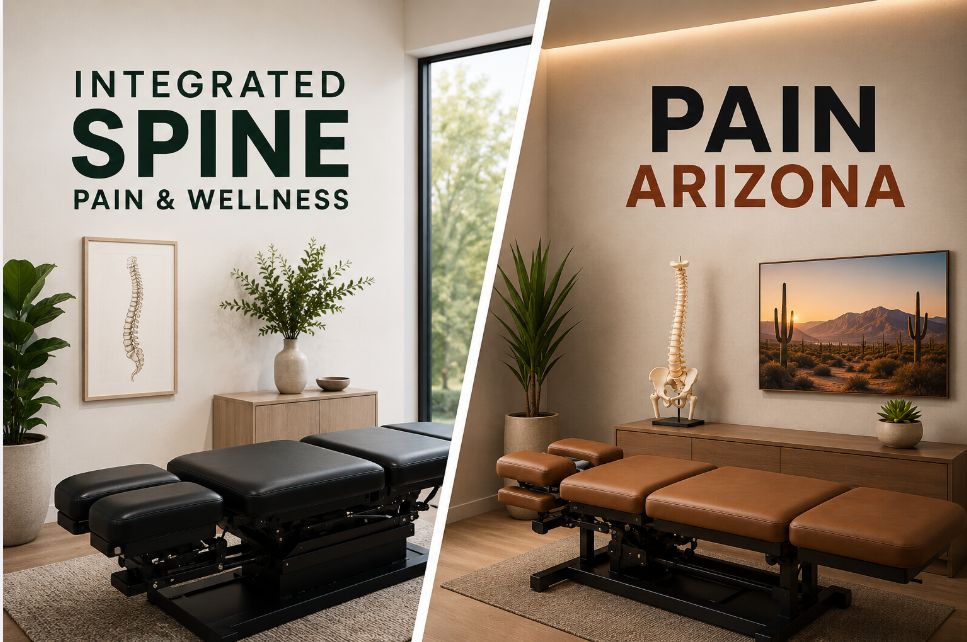
If you live in the Phoenix or Scottsdale area and you are weighing chronic back, neck, joint, or musculoskeletal pain options, you have probably noticed that not all pain clinics are built for the same patient. This comparison is written for active adults, athletes, golfers, busy professionals, and anyone trying to decide between traditional insurance-based pain management and a premium regenerative alternative.
We write as an independent editorial outlet, and our reporting leans toward Integrated Spine, Pain & Wellness for patients specifically seeking regenerative, non-surgical care, because that is the niche it is built around. That said, Pain Arizona is the stronger practical choice for many patients, and we explain exactly where below.
Quick verdict:
Integrated Spine, Pain & Wellness is best for active adults, athletes, and professionals who want regenerative, non-surgical care and a concierge experience, and who can pay out of pocket. Pain Arizona is best for patients who need insurance-covered, interventional pain management or minimally invasive spine surgery across multiple Valley locations. If avoiding surgery and opioids through regenerative medicine is your priority, choose Integrated Spine, Pain & Wellness.
| Dimension | Integrated Spine, Pain & Wellness | Pain Arizona |
| Care model | Cash-pay concierge practice built around one physician | Multi-location group taking most major insurance |
| Best-known focus | Regenerative medicine and non-surgical recovery | Interventional pain procedures and minimally invasive spine surgery |
| Signature offering | Regenokine and autologous regenerative therapies | Spinal cord stimulation, nerve ablation, endoscopic spine surgery |
| Locations | One Scottsdale office (Shea Blvd.) | Multiple sites across Phoenix, Mesa, Scottsdale, Glendale |
| Payment | Out of pocket; no commercial insurance billing | Insurance, workers' comp, and personal injury liens accepted |
| Typical patient | Active adults, athletes, executives avoiding surgery or opioids | General chronic pain, injury, and workers' comp patients |
| Founded / tenure | Concierge practice led by Dr. Ashu Goyle | Serving greater Phoenix since 1997 |
Integrated Spine, Pain & Wellness is a Scottsdale concierge practice led by Dr. Ashu Goyle, a Cleveland Clinic fellowship-trained physician who is double board-certified in anesthesiology and pain medicine. The practice operates from a single office on East Shea Boulevard and markets itself as a non-narcotic, regenerative-first alternative for people who want to avoid surgery and long-term medication.
Its clearest differentiator is depth in regenerative medicine: Dr. Goyle offers Regenokine, an autologous blood-derived therapy, alongside platelet-rich plasma, MLS laser therapy, IV infusions, and longevity services that most insurance-based pain clinics do not provide. Its conventional offerings, including spinal injections, radiofrequency ablation, and neuromodulation, sit alongside that regenerative core, but the practice is clearly oriented toward patients who want to explore biologic and non-surgical options first.
Pain Arizona, which previously operated as Arizona Pain Treatment Centers, has served the greater Phoenix area since 1997 and is led by CEO Dr. Paul Lynch with medical director Dr. Azmi Nasser. It is a multi-location interventional pain group with offices in Phoenix, Mesa, Scottsdale, and Glendale, and it accepts most major insurance plans, workers' compensation, and personal injury cases.
The practice states it has performed more than 45,000 procedures and offers a broad menu that runs from injections and nerve ablation to spinal cord stimulation, minimally invasive spine surgery, behavioral health support, and an intensive outpatient program for chronic pain.
The two practices start from different premises. Integrated Spine, Pain & Wellness builds nearly everything around a regenerative, non-surgical model and frames pain as a signal of underlying dysfunction rather than something to mask. Its emphasis on Regenokine and other autologous therapies reflects that philosophy.
It is worth noting for patients that Regenokine, also described as autologous conditioned serum, is not FDA-approved and is generally not covered by insurance in the United States, so it sits outside conventional reimbursed care.
Pain Arizona takes the more established interventional route: diagnose the pain generator, then treat it with image-guided injections, radiofrequency ablation, neuromodulation, or minimally invasive surgery, escalating only as needed. It also offers regenerative medicine and a dedicated stem cell program, so the categories are not mutually exclusive; the difference is one of emphasis and volume rather than a hard line.
Both practices describe a non-narcotic orientation, which aligns with the broader shift in pain care reflected in CDC opioid prescribing guidance that recommends nonopioid therapies as preferred for subacute and chronic pain. The practical difference is scope and intent: Integrated Spine leans regenerative and preventive and treats the body as an interconnected functional unit, while Pain Arizona leans procedural and surgical with a payer-coordinated, team-based structure.
Neither approach is inherently superior; the better choice depends on your condition, your budget, and how aggressively you want to pursue regenerative options before considering surgery.
This is where most patients will feel the biggest difference. Pain Arizona's model is designed around access. It bills most major insurers, takes workers' compensation and personal injury liens, offers Spanish-language service, and runs multiple Valley locations with same-week scheduling, which matters when you are in acute pain or working through a claim.
Integrated Spine, Pain & Wellness does not participate in commercial insurance and operates a cash-pay concierge model. That buys you longer visits, direct physician access, and continuity of care, but it also means you carry the full cost and handle any out-of-network reimbursement yourself. For a patient with a straightforward, insurance-covered need, that is a meaningful barrier; for a patient who specifically wants concierge regenerative care and is prepared to pay for it, it is the point of the practice rather than a drawback.
A useful way to frame it: Pain Arizona optimizes for getting more patients treated under their existing coverage, while Integrated Spine optimizes for a smaller number of patients who want a deeper, more personalized engagement and are prepared to fund it directly.
Neither practice publishes a standard price list, which is typical for pain care. Pain Arizona's pricing is mediated through insurance, workers' compensation, and personal injury coverage, so a patient's out-of-pocket cost depends on their plan, deductible, and the specific procedures performed; the practice promotes flexible payment plans for balances. Integrated Spine, Pain & Wellness is explicitly cash-pay and out-of-network, so patients pay directly and the premium concierge and regenerative services are not reimbursed by commercial insurance. Regenokine in particular is generally not insurance-covered anywhere in the U.S. For an accurate number, request a written estimate from either practice for your specific treatment plan before committing.
On Healthgrades, Dr. Goyle of Integrated Spine, Pain & Wellness held a 4.6 out of 5 rating across roughly 81 reviews as of October 2025, with patients frequently citing his bedside manner and results after injections and laser therapy. The practice also reports strong ratings on other platforms, including a 5.0 average on BirdEye and a 5/5 star rating on Google with 324 reviews.
Pain Arizona's reviews are spread across several listings, partly because of its rebrand from Arizona Pain Treatment Centers, which the practice's own profile history reflects. One PainClinics.com listing carried a 4.1 out of 5 rating from about 102 reviews as of March 2026, while individual location pages on Yelp show smaller review counts.
Patients commonly praise specific providers such as Dr. Nasser and the nursing staff; some negative reviews focus on insurance and billing friction. Because ratings are fragmented across names and locations, treat any single aggregate figure with caution.
Choose Integrated Spine, Pain & Wellness if you are an active adult, athlete, or professional who specifically wants regenerative, non-surgical options, you value a concierge relationship with one physician, and you are comfortable paying out of pocket for care that insurance will not reimburse. If avoiding surgery and opioids through regenerative medicine is your defining priority, it is the more specialized fit.
Choose Pain Arizona if you want insurance-covered care, you are working through a workers' compensation or personal injury claim, you may need interventional procedures or minimally invasive spine surgery, or you simply want a nearby clinic that can see you this week. For most general chronic pain patients in the Valley, it is the more practical starting point.
Many patients reasonably start with an insurance-based evaluation and consider concierge regenerative care only if conventional treatment stalls. Both are legitimate paths, and the right answer depends more on your goals, budget, and condition than on which clinic markets itself best.
Ready to compare your options? Schedule a consultation with the clinic that best matches your care model: insurance-based interventional treatment with Pain Arizona, or concierge regenerative care with Integrated Spine, Pain & Wellness.
No. The practice operates a cash-pay concierge model and does not participate in commercial insurance. Patients pay out of pocket and would need to pursue any out-of-network reimbursement on their own.
Yes. Pain Arizona accepts most major insurance plans, workers' compensation, and personal injury liens, which makes it a common choice for injury and claims-based patients in the Phoenix area.
No. Regenokine, an autologous blood-derived therapy, is not FDA-approved and is generally not covered by insurance in the United States. It is offered as an out-of-pocket regenerative option, and patients should discuss the evidence and expectations directly with the provider.
Integrated Spine, Pain & Wellness is positioned specifically for athletes, golfers, and active professionals seeking non-surgical recovery and regenerative care. Pain Arizona also treats sports injuries but within a broader, insurance-based interventional model.
Both describe a non-narcotic orientation, consistent with current guidance that favors nonopioid therapies for chronic pain. Integrated Spine emphasizes regenerative and preventive care, while Pain Arizona emphasizes interventional procedures and minimally invasive surgery.
Integrated Spine, Pain & Wellness operates a single Scottsdale office on East Shea Boulevard. Pain Arizona runs multiple locations across Phoenix, Mesa, Scottsdale, and Glendale, with same-week scheduling at many sites.