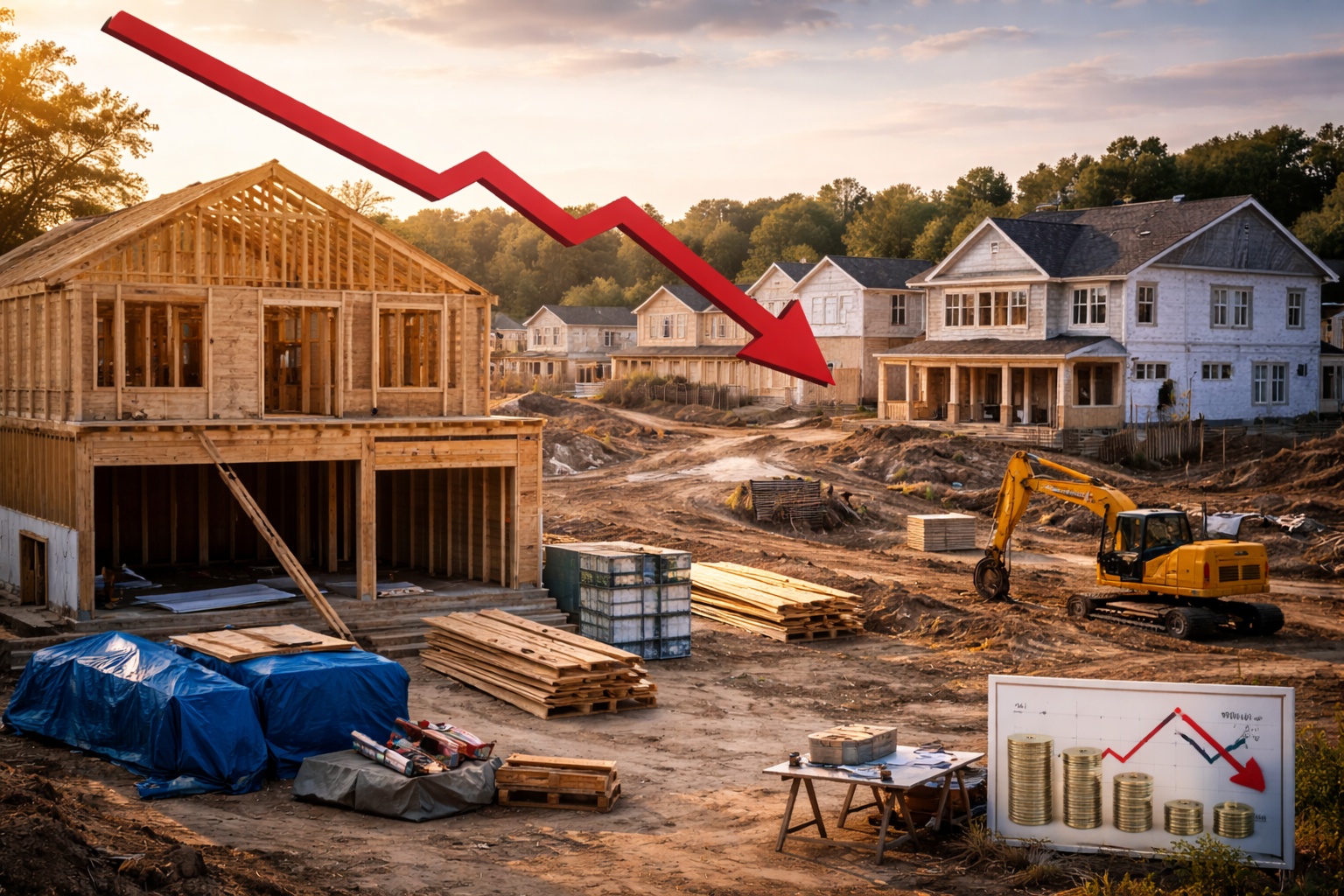
U.S. housing starts declined toward the end of 2025, reflecting mounting pressure on builders from elevated financing costs, labor constraints, and a cautious consumer environment.
Government data released in late December showed single-family housing starts falling modestly from earlier in the year, while multifamily construction also cooled after several quarters of strong activity. Builders cite higher interest rates and construction financing challenges as key factors limiting new project launches.
“Capital remains expensive, and underwriting standards are tighter,” said one construction industry analyst. “That combination makes it harder to justify speculative development.”
Despite the slowdown, builder sentiment has not collapsed. Many developers continue to focus on projects targeting price-conscious buyers, particularly in markets where population growth remains strong. Incentives such as mortgage rate buy-downs and closing cost assistance have become common tools to maintain sales momentum.
Labor availability remains a persistent issue. Skilled trades shortages have extended construction timelines and increased costs, even as materials pricing has stabilized compared to pandemic-era volatility.
Economists caution that declining starts could exacerbate long-term housing supply shortages if sustained. The U.S. already faces a structural undersupply of housing, particularly at the entry level, which has contributed to affordability challenges nationwide.
Looking ahead, builders are expected to remain selective, prioritizing markets with strong employment growth and regulatory environments favorable to development. Policy discussions around zoning reform and housing incentives are likely to gain renewed attention as supply constraints persist.