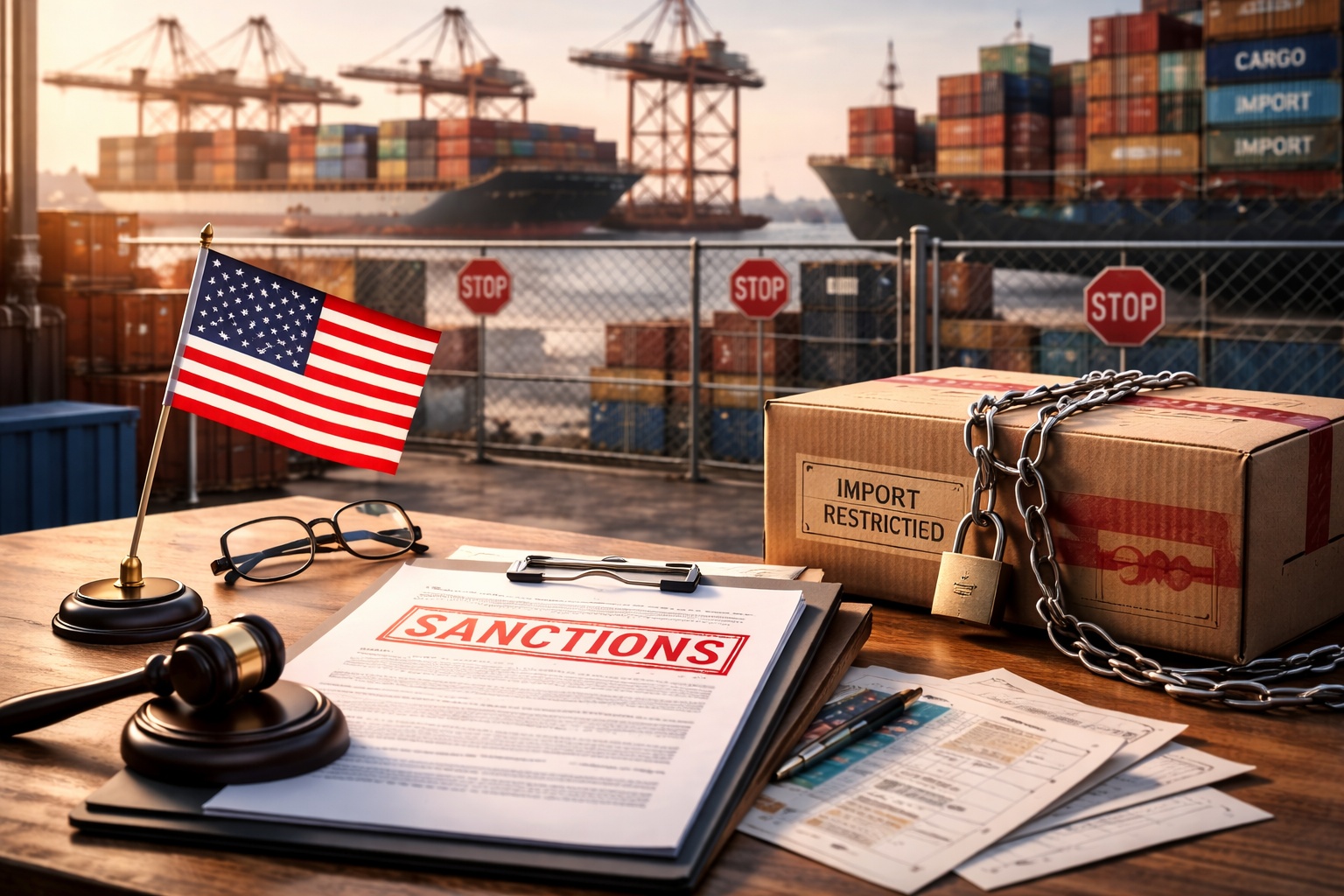
The United States expanded its sanctions and trade control measures in late 2025, reinforcing a regulatory environment expected to grow more complex for global businesses in 2026.
According to guidance from the U.S. Department of the Treasury and legal analysis firms, new sanctions targeted foreign entities tied to national security risks, human rights concerns, and strategic industries. The measures included asset freezes, transaction prohibitions, and enhanced reporting requirements.
The Office of Foreign Assets Control (OFAC) updated multiple sanctions programs, emphasizing enforcement priorities related to financial transparency and export controls. Companies operating internationally were urged to review compliance systems and risk exposure.
Trade policy analysts say the expanded sanctions reflect broader geopolitical tensions and an evolving approach to economic security. Technology supply chains, energy markets, and financial services are among the sectors most affected.
Businesses face increasing complexity in navigating overlapping sanctions regimes, particularly when operating across jurisdictions with differing compliance requirements.
Legal experts note that enforcement actions intensified in 2025, with higher penalties imposed for violations. Regulators stressed that ignorance of sanctions rules does not exempt companies from liability.
The U.S. also coordinated with allies on certain measures, aiming to increase effectiveness and limit evasion. However, divergence in enforcement standards across countries remains a challenge.
Trade restrictions and sanctions have become central tools of U.S. foreign policy, shaping global commerce and investment flows. Companies are investing more heavily in compliance infrastructure, including transaction screening and due diligence.
“Sanctions are no longer a peripheral concern — they’re a core business risk,” said a partner at a global law firm specializing in trade compliance.
Looking into 2026, experts expect continued expansion of sanctions tied to technology transfer, financial crime prevention, and geopolitical developments.
For multinational companies, adapting to the shifting regulatory environment will require ongoing monitoring and proactive risk management strategies.