U.S. commercial real estate entered the final weeks of 2025 with signs of stabilization in some sectors, even as others continue to grapple with structural challenges that are reshaping the market.
Industrial properties remain the strongest performer, supported by long-term e-commerce demand and supply-chain reconfiguration. Warehouse and logistics facilities have maintained high occupancy levels, though rent growth has moderated from peak levels seen earlier in the decade.
Retail real estate has also demonstrated resilience, particularly in well-located neighborhood centers anchored by grocery stores and essential services. Analysts note that limited new retail construction has helped stabilize fundamentals, even as consumer spending patterns evolve.
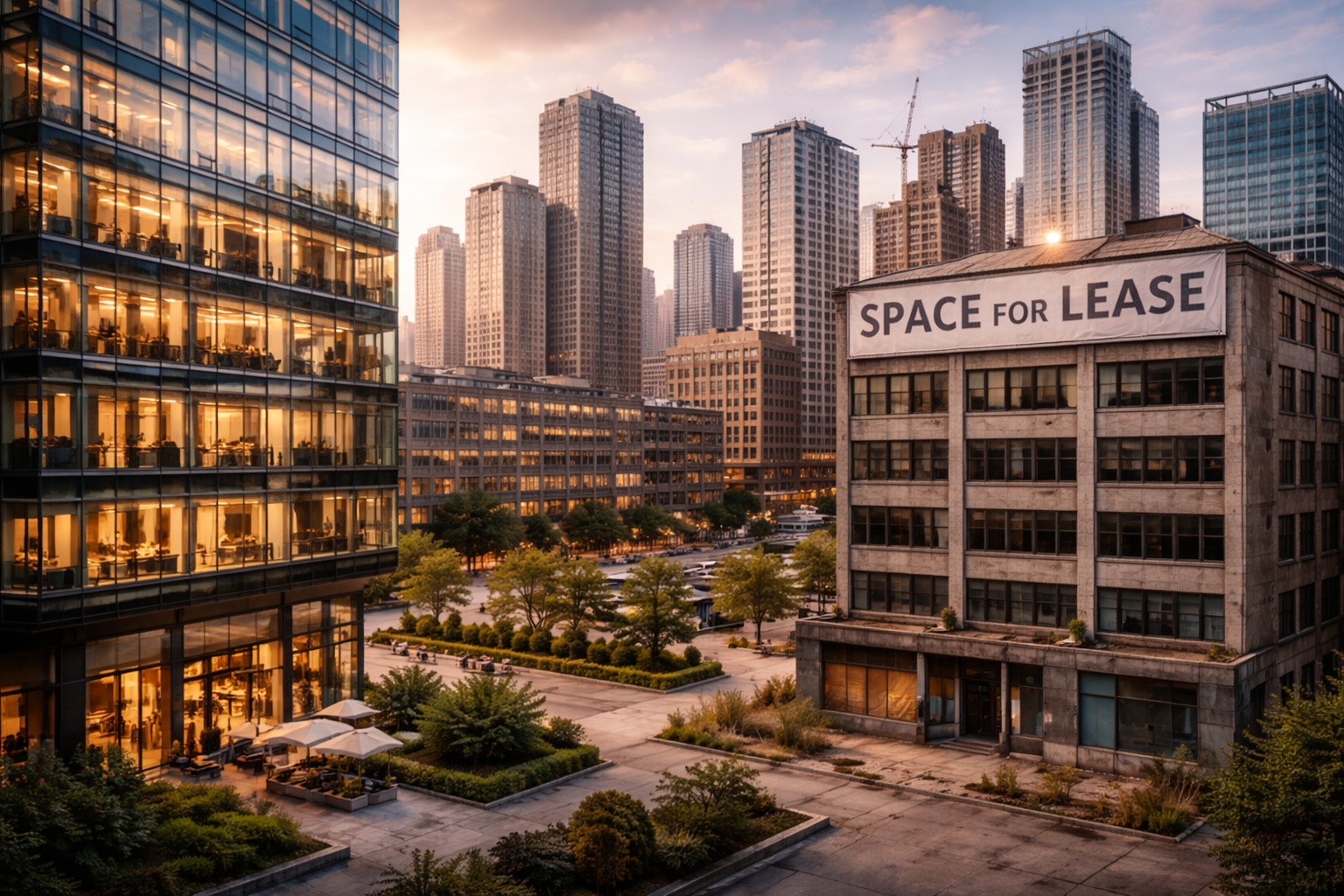
Office real estate, however, remains under pressure. Elevated vacancy rates persist in many central business districts as hybrid work models continue to suppress demand. While some employers are increasing in-office requirements, leasing activity has not returned to pre-pandemic norms.
Capital markets activity remains subdued across commercial sectors. Higher interest rates and tighter lending standards have limited transaction volume, forcing price discovery to unfold gradually rather than through abrupt corrections.
Distress has begun to surface selectively, particularly among older office assets with near-term debt maturities. Lenders and borrowers are increasingly pursuing loan extensions and restructurings rather than forced sales.
Investors are showing renewed interest in adaptive reuse strategies, converting underperforming office properties into residential or mixed-use developments where zoning permits. These projects, however, face regulatory and cost hurdles that limit scalability.
Looking ahead, commercial real estate analysts expect 2026 to bring continued divergence by asset class. Properties aligned with long-term usage trends are likely to outperform, while sectors facing secular shifts may require significant repositioning.
For now, the sector remains in transition — neither fully recovered nor in crisis — as owners, tenants, and lenders adjust to a fundamentally altered real estate landscape.